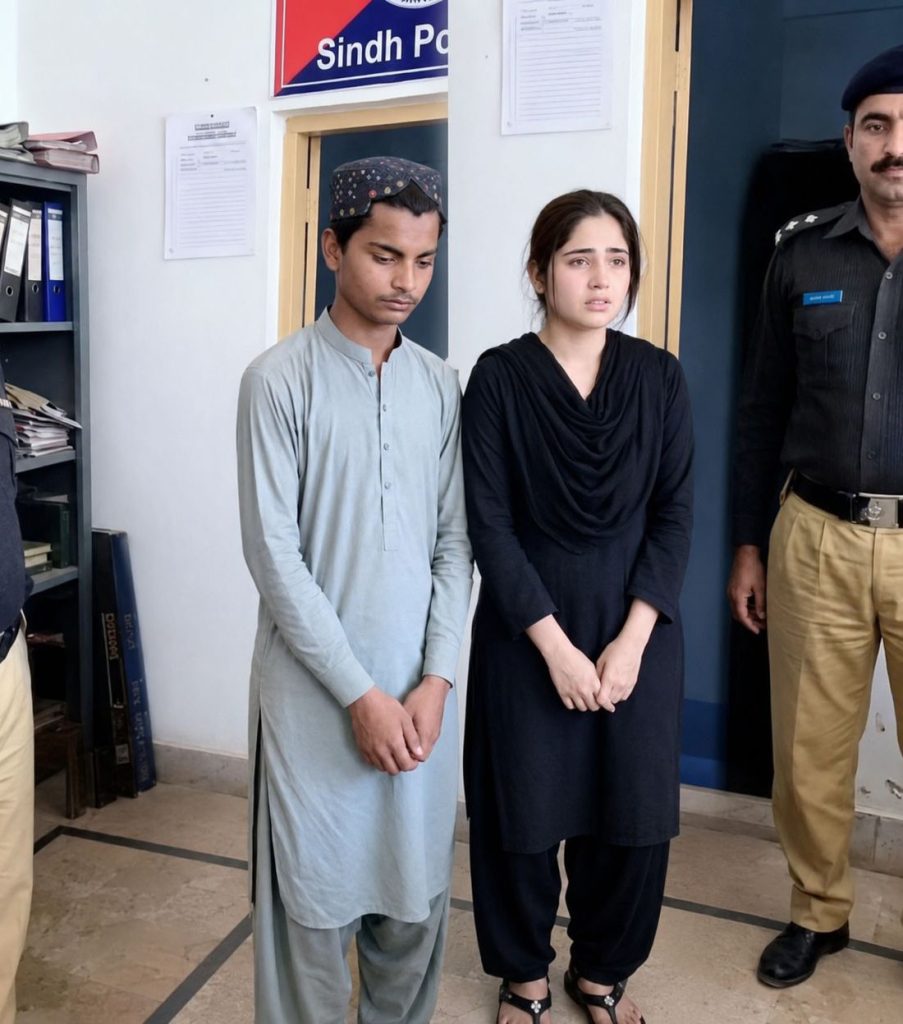
In a quiet town surrounded by green fields and narrow streets, everyone knew everyone. Life moved slowly, and surprises were rare. That is why the sudden disappearance of nineteen-year-old Hira left the entire community in shock.

Hira was known for her kindness and bright smile. She was a university student who dreamed of becoming a teacher. Every morning, she walked to the bus stop carrying her books, greeting neighbors along the way. Her family adored her, and her parents often said she was the heart of their home.
One ordinary Tuesday afternoon, Hira left her college campus and never returned home.
At first, her family assumed she had stayed late for an assignment or visited a friend. But when evening arrived and her phone remained unreachable, concern turned into panic.
Her father, Imran, began calling everyone he knew.
“Have you seen Hira?” he asked repeatedly.
No one had.
By midnight, the family reported her missing.
The next morning, the town was buzzing with rumors.
Some thought she had left voluntarily.
Others feared something far worse.
Among the many people helping the family was a young man named Rustam.
Rustam was twenty-two, quiet, and mysterious. He had moved to the town only a year earlier. He worked at a local repair shop and kept mostly to himself. Few people knew much about him.
Still, he volunteered to help search for Hira.
He joined neighborhood groups, printed posters, and walked door to door asking questions.
At first, everyone appreciated his efforts.
But then small details began to raise suspicion.
A shopkeeper remembered seeing Hira speaking to Rustam a few days earlier.
A bus driver recalled the two standing near the station together.
When investigators reviewed nearby security footage, they noticed Hira entering a vehicle that looked remarkably similar to Rustam’s.
The community was stunned.
Could the helpful young man know more than he was saying?
Authorities brought Rustam in for questioning.
He denied everything.
“I didn’t take her,” he said calmly.
“I was only trying to help.”
But his nervous behavior told another story.
Investigators searched his home.
At first, they found nothing unusual.
Then one officer discovered a handwritten note hidden in a drawer.
It read:
“Trust me. I will explain everything in three days.”
The note was signed with the letter “H.”
Suddenly, the case became even more confusing.
Had Hira written it?
Was she in danger—or had she gone willingly?
For the next 48 hours, the town waited anxiously.
News spread quickly.
Families kept their children close.
Parents warned teenagers about trusting strangers.
Meanwhile, Hira’s mother barely slept.
She sat near the front door every night, hoping her daughter would walk in.
On the third day, something unexpected happened.
A call came into the police station.
A young woman’s voice said, “I’m safe. Please tell my parents not to worry.”
It was Hira.
Authorities traced the call to a small cottage outside town.
When officers arrived, they found Hira sitting calmly on the porch.
Rustam was inside.
No one was injured.
No signs of force.
No locked doors.
The officers were confused.
“What happened here?” one asked.
Hira looked down.
Then she told the truth.
Months earlier, she had met Rustam at a local bookstore.
At first, they spoke only briefly.
Then they began talking more often.
They discovered shared interests—books, music, and dreams of leaving their small town for bigger opportunities.
Over time, their friendship became stronger.
But Hira’s family had strict expectations.
They wanted her focused only on studies and family responsibilities.
She feared they would never accept her friendship with Rustam.
So she kept it secret.
When her family began discussing an arranged marriage proposal, Hira panicked.
She felt trapped.
Rustam suggested something impulsive.
“Take a few days away,” he said.
“Use the time to think clearly.”
At first, she refused.
But under emotional pressure and confusion, she agreed.
They traveled to the isolated cottage.
Their intention, according to Hira, was not to run away forever—but to create space and time.
Yet they made one major mistake:
They left without informing anyone.
What felt to them like a private escape became a public crisis.
Her parents believed she had been taken against her will.
The town believed a serious crime had occurred.
And Rustam became the face of suspicion.
When Hira’s father arrived at the station and saw her safe, tears filled his eyes.
He hugged her tightly.
“You should have told us,” he said.
“I was afraid,” she replied softly.
“Afraid of what?”
“That you wouldn’t listen.”
Those words hit harder than anything else.
For the first time, her parents realized their daughter had been carrying fears they had never noticed.
Rustam also spoke.
“I know what we did was irresponsible,” he admitted.
“I never intended harm. I only wanted to help her.”
Authorities confirmed there had been no violence or physical harm.
Still, they emphasized the seriousness of the situation.
Actions have consequences—even when intentions seem harmless.
The emotional damage to the family and community had been significant.
For weeks afterward, the town discussed the case.
Some blamed Rustam.
Some blamed Hira.
Others blamed poor communication.
But eventually, most agreed on one thing:
This situation could have been avoided through honest conversation.
Hira returned home.
The first few days were difficult.
Her parents were relieved—but also hurt.
Trust had been shaken.
To rebuild it, the family agreed to attend counseling together.
There, they learned something important:
Love without communication often creates misunderstanding.
Parents must listen—not only instruct.
Young adults must speak—not only hide.
And emotions should never drive major decisions without reflection.
As for Rustam, he apologized publicly.
“I made a poor decision,” he told the community.
“I should have encouraged openness, not secrecy.”
Many respected his honesty.
Though some remained cautious, others recognized that he had not intended to cause harm.
He eventually left the town to start over elsewhere.
Before leaving, he met Hira one last time.
“Take care of yourself,” he said.
“You too,” she replied.
Their paths separated—not with anger, but with understanding.
Months later, Hira was invited to speak at her university about communication and responsible choices.
Standing before a room full of students, she said:
“When emotions are strong, even smart people can make poor decisions. I believed a few days away would solve my problems. Instead, it created pain for everyone I love. Silence can be dangerous. Speak before situations become crises.”
Her words deeply moved the audience.
Many students later thanked her for sharing her experience.
At home, things slowly improved.
Her parents began asking more questions—and listening more carefully.
Hira felt heard for the first time.
The family became stronger, not because they avoided mistakes, but because they learned from them.
Years later, when people in town remembered the “three-day mystery,” they no longer spoke only about fear.
They spoke about lessons.
About trust.
About communication.
About how quickly assumptions can grow when truth is missing.
And Hira never forgot what those three days taught her:
Running away from difficult conversations never solves the problem.
It only delays it.
Moral of the story:Secrets and impulsive decisions can create unnecessary fear and misunderstanding. Honest communication with family and loved ones is always better than silence, and trust grows strongest where truth is spoken openly.