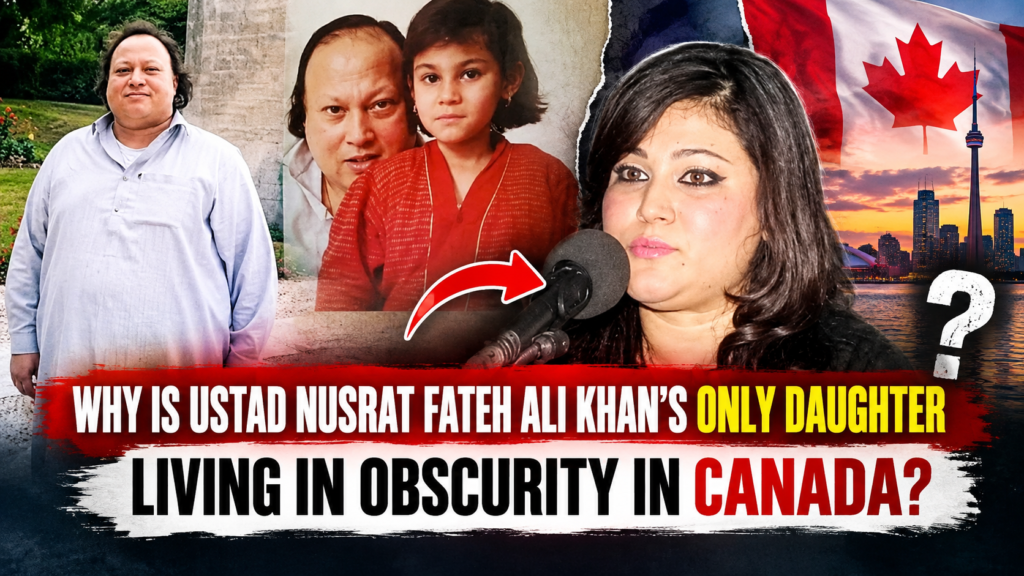
Discover the lesser-known story of Nida Nusrat, the only daughter of legendary qawwali maestro Ustad Nusrat Fateh Ali Khan, her move to Canada after her father’s death, the hardships she described, and her battle to protect his musical legacy.
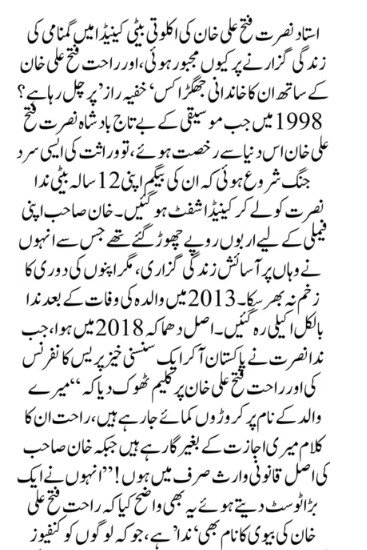
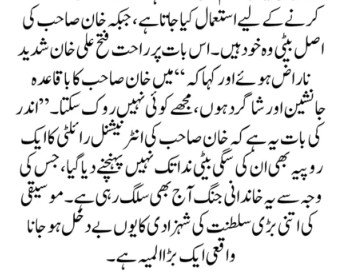
Few voices in the history of South Asian music have travelled as far—or touched as many hearts—as that of Ustad Nusrat Fateh Ali Khan. Decades after his death, his qawwalis continue to attract listeners across Pakistan, India, Europe, North America and beyond.
Yet there is a striking contrast at the heart of his story. While Nusrat Fateh Ali Khan’s music remains globally celebrated, his only daughter, Nida Nusrat, has spent much of her life away from the public spotlight.
This has sometimes produced a dramatic question: Why was Nusrat Fateh Ali Khan’s only daughter forced to live a life of obscurity in Canada?
The available record tells a more nuanced story. Nida herself said that she moved to Canada with her mother after her father’s death and that they experienced difficult times. But reliable reporting does not establish that anyone literally “forced” her into obscurity. Her story is better understood through bereavement, migration, privacy and her later struggle to protect what she described as her father’s musical rights. Dawn
The Only Daughter of a Global Music Legend
Nusrat Fateh Ali Khan died on August 16, 1997, at only 48 years of age. His death left an enormous void in the world of qawwali, but for his family it was first and foremost a deeply personal loss.
Nida has publicly identified herself as Nusrat Fateh Ali Khan’s only daughter and sole heir. At a Lahore Press Club appearance in 2018, she said she had no siblings and asserted her rights over her late father’s musical work. Dawn
The Urdu material provided with this article presents the same broad narrative: after the death of her famous father, Nida’s life took a dramatically different direction from the public musical career with which the Nusrat name had become synonymous.
Why Did Nida Nusrat Move to Canada?
According to Nida’s own account, she was very young when her father died. She subsequently moved to Canada with her mother, Naheed Nusrat.
In her 2018 comments, Nida described the period following her father’s death as extremely difficult. She said that she and her mother faced hardships after relocating to Canada and alleged that people took advantage of their circumstances by infringing the copyrights of her father’s songs. Dawn
Another contemporary report quoted Nida as explaining that she and her mother had been unable to cope with Nusrat’s sudden death and therefore settled in Canada. Pakistan Today
This distinction matters. Describing her as having been “forced to live in obscurity” may make a compelling headline, but the evidence available publicly does not prove that another person or family member forced her to leave Pakistan or deliberately kept her out of public life.
What is documented is a young daughter losing an internationally famous father, moving abroad with her mother, experiencing what she later described as hardship, and largely disappearing from Pakistan’s entertainment media.
A Famous Father, but a Private Daughter
Perhaps the most remarkable aspect of Nida Nusrat’s story is just how little the public heard from her for many years.
Nusrat Fateh Ali Khan’s recordings continued to circulate around the world. New generations discovered classics associated with his extraordinary voice, while musicians continued performing and reinterpreting qawwali.
Nida, however, did not initially pursue the same highly visible public career.
That silence eventually became important because the absence of Nusrat’s daughter from public life allowed misinformation and confusion about her identity to circulate online.
In 2018, she publicly rejected claims that she was married to Rahat Fateh Ali Khan. She explained that Rahat’s wife simply shared her name. Nida also complained about inaccurate information online and fake social-media pages using her father’s identity. Dawn
Nida Nusrat’s Fight for Her Father’s Musical Legacy
Nida’s public re-emergence in 2018 was therefore significant.
Speaking at the Lahore Press Club, she declared herself the sole heir of Nusrat Fateh Ali Khan and announced plans to act against alleged copyright infringement involving her father’s music. Dawn
She alleged that individuals and organizations had financially benefited from her father’s work without authorization. Reports from the time also recorded allegations concerning Khokhar Productions; these should be understood as Nida’s allegations, not as independently established findings of wrongdoing. The Express Tribune
Her position was straightforward: Nusrat Fateh Ali Khan’s artistic legacy might belong emotionally to millions of admirers, but she argued that the legal rights attached to his recordings and compositions could not simply be commercially exploited without authorization.
The episode highlighted a difficult question surrounding the legacy of great artists: who controls their work after they are gone?
What About Rahat Fateh Ali Khan?
The issue became even more complicated because Nusrat Fateh Ali Khan’s nephew and celebrated singer Rahat Fateh Ali Khan had become one of the most recognizable custodians of the family’s qawwali tradition.
Nida publicly said that she did not have differences with Rahat and described him as being like a brother to her. Dawn
Rahat, however, publicly presented a different understanding of the musical inheritance. In response to the copyright controversy, he described himself as Nusrat’s janasheen, or successor, and emphasized that qawwali had been passed through their family for generations. He argued that members of the family had historically performed the works associated with earlier generations without treating the tradition as divided individual property. The News International
These statements reveal an important distinction between family musical tradition, performance rights, copyright ownership and inheritance. They are related issues, but they are not necessarily legally identical.
Was Nida Nusrat Really “Forced” Into Obscurity?
Based on the publicly documented evidence, that conclusion goes too far.
Nida’s own statements support several facts: she lost her father while young, moved to Canada with her mother, experienced hardship, remained outside the public eye for years and later became concerned about alleged unauthorized exploitation of her father’s work. Dawn
What they do not clearly establish is that a particular person deliberately forced her into exile or intentionally prevented her from participating in her father’s legacy.
Her years away from the spotlight appear, from the evidence available, to have been shaped by personal loss, relocation and privacy, followed later by disputes over the control and use of Nusrat Fateh Ali Khan’s music.
The Forgotten Side of Nusrat Fateh Ali Khan’s Legacy
Nida Nusrat’s story adds a deeply human dimension to the legacy of Ustad Nusrat Fateh Ali Khan.
To millions of listeners, Nusrat is an immortal voice. To Nida, however, he was also a father whose sudden death transformed her childhood.
Her return to public attention in 2018 was not simply a celebrity appearance. It was an attempt to establish her identity, challenge misinformation and assert what she said were her rights as her father’s only heir.
That makes the story more compelling than the sensational claim that she was simply “forced into obscurity.”
Nusrat Fateh Ali Khan’s music became part of global culture, while his daughter spent years far from the fame surrounding his name. Her story is therefore not merely about Canada or celebrity. It is about grief, inheritance, copyright, family tradition and the complicated responsibility of protecting the legacy of one of the greatest voices South Asia has ever produced.